Every experienced real estate investor in Austin has a secret that took them years to learn: the best deals are hiding in plain sight inside public records. While most beginners are scrolling Zillow and competing with dozens of other buyers on MLS listings, savvy investors are pulling tax delinquency lists, tracking code violations, and monitoring pre-foreclosure filings to find motivated sellers weeks or months before a property ever hits the market.
Austin's Travis County maintains some of the most accessible public records in Texas. If you know where to look and what to look for, these records become a pipeline of investment opportunities.
What Public Records Actually Tell You
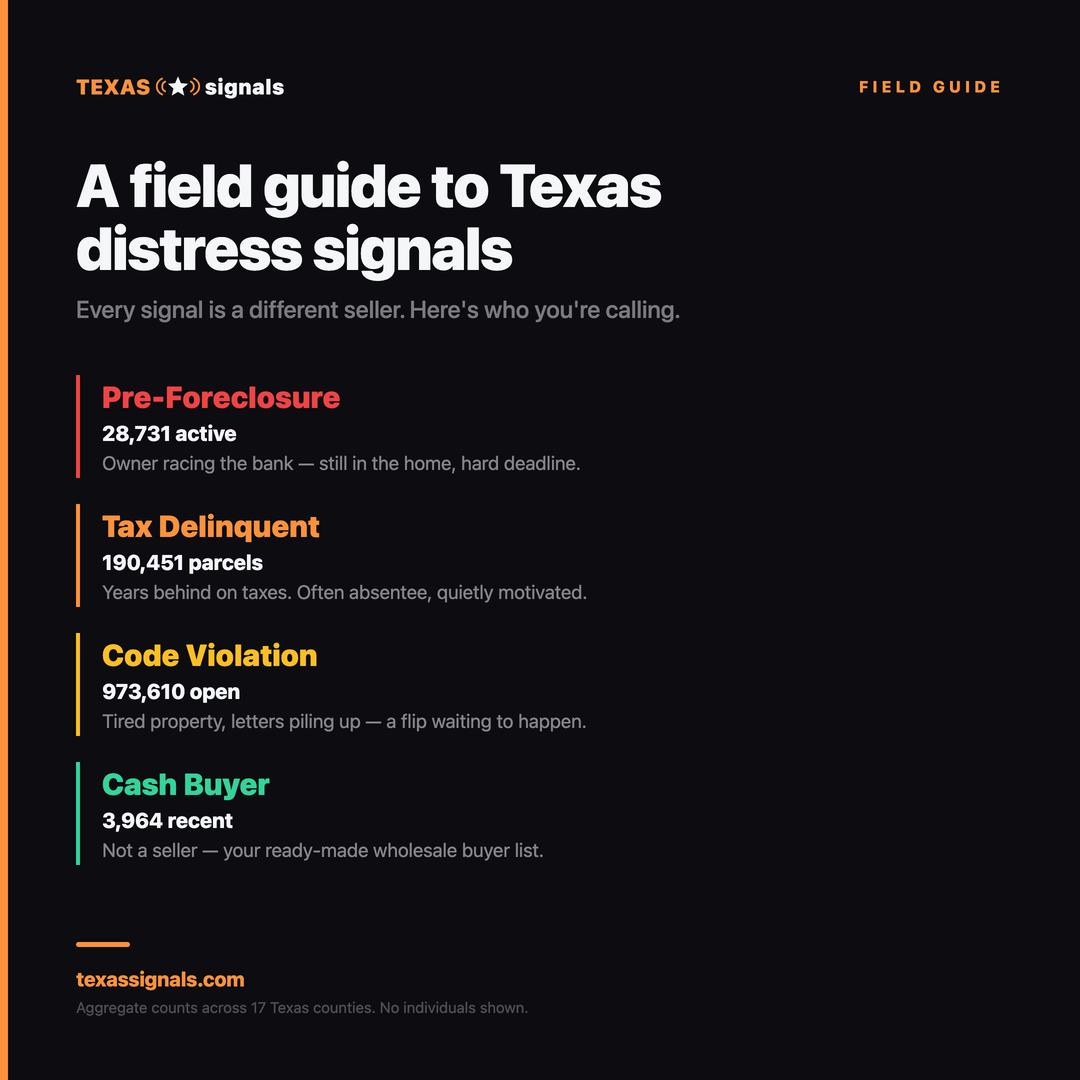
Public records are government-maintained documents that anyone can access. For real estate investors, five categories matter most:
•Tax delinquent properties — Owners who have fallen behind on property taxes are often under financial pressure. Travis County currently has over 13,000 tax delinquent properties on file, and many of these owners would consider selling at a discount rather than losing the property at a tax sale.
•Pre-foreclosure filings — When a lender files a Notice of Default or a lis pendens, it signals that the homeowner has stopped making mortgage payments. Austin's pre-foreclosure pipeline typically runs between 4,000 and 5,000 active filings at any given time. These homeowners have a narrow window to sell before foreclosure completes.
•Code violations — Properties with open code violations often belong to absentee landlords, overwhelmed owners, or estates in transition. Travis County tracks tens of thousands of active violations. A property with stacking violations frequently indicates an owner who has checked out.
•Building permits — Permit data reveals where renovation and new construction activity is concentrating. Over 112,000 permits are on record in the Austin area, and tracking permit clusters helps you identify emerging neighborhoods before price appreciation catches up.
•Cash buyer activity — Monitoring recent cash transactions shows you which ZIP codes professional investors are targeting. When cash buyers concentrate in a specific area, it usually means the numbers work for investment returns there.
How to Actually Access Austin Public Records
Travis County makes records available through several channels, but none of them are particularly user-friendly for investment research:
Travis County Tax Office (traviscountytax.org) publishes delinquent tax rolls, but the data comes in bulk formats that require cleanup before you can use it for outreach. You will need to cross-reference with the Travis Central Appraisal District (TCAD) to get property details and owner mailing addresses.
Travis County District Clerk maintains foreclosure filings, but searching effectively means knowing case types and filing codes. Pre-foreclosure data is especially time-sensitive — by the time most beginners find a filing manually, the auction date may be days away.
City of Austin Code Enforcement (austin311 system) tracks violations, but the interface is designed for residents reporting issues, not investors mining data.
The fundamental problem is that each data source lives in a separate system with a different interface, different update schedule, and different format. Professional investors either spend hours each week manually pulling and cross-referencing records, or they use tools that aggregate the data automatically.
Turning Raw Records Into Actionable Leads
A public record by itself is just a data point. It becomes a lead when you layer multiple signals together. Here is the framework experienced Austin investors use:
Single signal = awareness. A property with one tax delinquency could be an oversight. A single code violation might be a minor fence issue. Do not chase single-signal leads aggressively.
Stacked signals = opportunity. A property that is tax delinquent AND has open code violations AND the owner lives out of state — that is a motivated seller profile worth pursuing. The more distress signals that overlap on a single property, the higher the probability the owner will consider a below-market offer.
Practical example: Say you find a property in the 78745 ZIP code with $8,000 in delinquent taxes, two open code violations for overgrown vegetation and a structural issue, and the mailing address for the owner is in another state. That property is costing the owner money every month with no apparent plan to address it. A respectful, direct mail piece offering to buy the property can be exactly what that owner needs.
Common Mistakes Beginners Make With Public Records
Chasing volume instead of quality. Sending 5,000 generic letters to every tax delinquent property in Travis County will burn your marketing budget fast. Target stacked signals in specific ZIP codes instead.
Ignoring data freshness. Public records can be weeks or months old by the time you access them. A pre-foreclosure filing from four months ago may have already gone to auction. Always verify current status before investing time in outreach.
Skipping the math. Before contacting any property owner, run your numbers. What is the after-repair value? What will repairs cost? What is your exit strategy — flip, rental, or wholesale? Public records help you find opportunities, but due diligence determines whether they are actually profitable.
Not being consistent. The investors who build sustainable deal flow from public records are the ones who review new data weekly, not once a quarter. Markets move fast in Austin, and stale lists produce stale results.
Getting Started Without Drowning in Data
If you are new to public records investing in Austin, start narrow. Pick two ZIP codes you know well, focus on one record type (tax delinquent is the most beginner-friendly), and commit to reviewing new filings every week for 90 days. You will start recognizing patterns — which neighborhoods produce the most leads, which owner profiles respond to outreach, and which deal structures work in the current market.
As you scale, layering in code violations, pre-foreclosures, and cash buyer patterns will sharpen your targeting significantly.
At Austin Signals, we aggregate and cross-reference Travis County public records daily so you can skip the manual data pulls and go straight to stacked-signal leads. Whether you are looking for your first investment property or building a portfolio, having clean, current data is the difference between guessing and knowing where the opportunities are.
The records are public. The advantage goes to whoever acts on them first.